The Bias Blind Spot in Localized Training
Imagine building an AI chatbot designed to assist global customers with their banking needs. If that chatbot is trained exclusively by a team of engineers and moderators sitting in a single office in San Francisco, it will inevitably develop a "bias blind spot." It will understand the slang, cultural norms, and financial terminology of the West Coast perfectly, but it might completely misinterpret a polite request from a customer in Mumbai or London.
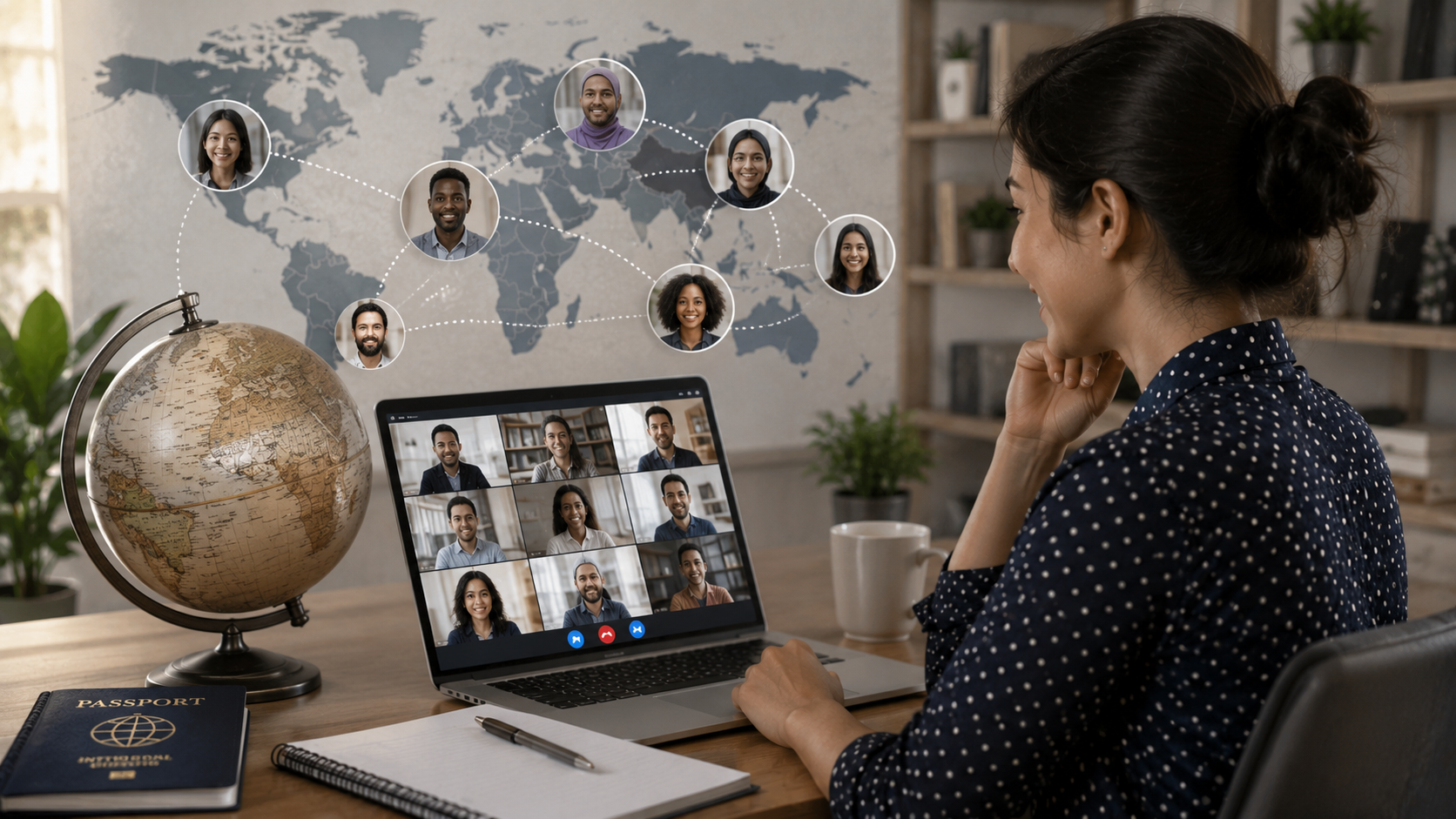
For Artificial Intelligence to be truly effective on a global scale, it needs Cross-Cultural Intelligence. And the only way to teach an AI about the world is to have the world teach the AI.
Building Globally Aware Models
- Linguistic Nuance Language is far more than just vocabulary and grammar; it is steeped in cultural context. A phrase that is considered highly professional in one country might be perceived as cold or rude in another. By utilizing a distributed remote workforce, AI developers can have native speakers from over 100 countries evaluating and correcting model outputs to ensure localized accuracy.
- Visual Context and Image Recognition Computer vision models suffer from the same localized bias. An AI trained to recognize a "typical wedding" might only identify white dresses and tuxedos if the training data is limited to Western ceremonies. Remote data labelers in India, Nigeria, and Japan can provide diverse image tags that teach the AI what weddings look like across different cultures, drastically improving the model's versatility.
- Ethical and Moral Alignment Different cultures have vastly different thresholds for what is considered offensive, inappropriate, or sensitive content. When human-in-the-loop (HITL) moderators from diverse backgrounds evaluate an AI's responses, they ensure the model learns to navigate complex global ethical standards, preventing PR disasters before they happen.
"An AI is only as smart as the people who train it. If your training team lacks diversity, your AI will lack empathy."
The Ultimate Value of a Global Talent Pool
Scaling an international, in-house team to train your AI is logistically impossible. This is where platforms like RemoteGhar bridge the gap. By providing instant access to verified, highly educated talent across every timezone and continent, we empower companies to build AI models that truly understand the entire world.
If you want your AI to have a global impact, it's time to give it a passport.
 Remote Ghar