Remote Ghar
Remote Ghar
Remote Ghar
Artificial intelligence is becoming a part of our everyday lives. Whether you're using a chatbot, a voice assistant, or a translation tool, AI is working behind the scenes.
But AI doesn't learn on its own. It learns from data provided by real people. From recording voice samples to reviewing text and images, human contributors help train AI systems to become smarter and more accurate.
These individuals are known as AI Training Data Contributors. As the demand for AI continues to grow, so do the opportunities for people to contribute to AI projects remotely.
In this guide, you'll learn what an AI Training Data Contributor does, the skills required, and how you can get started in this growing field.
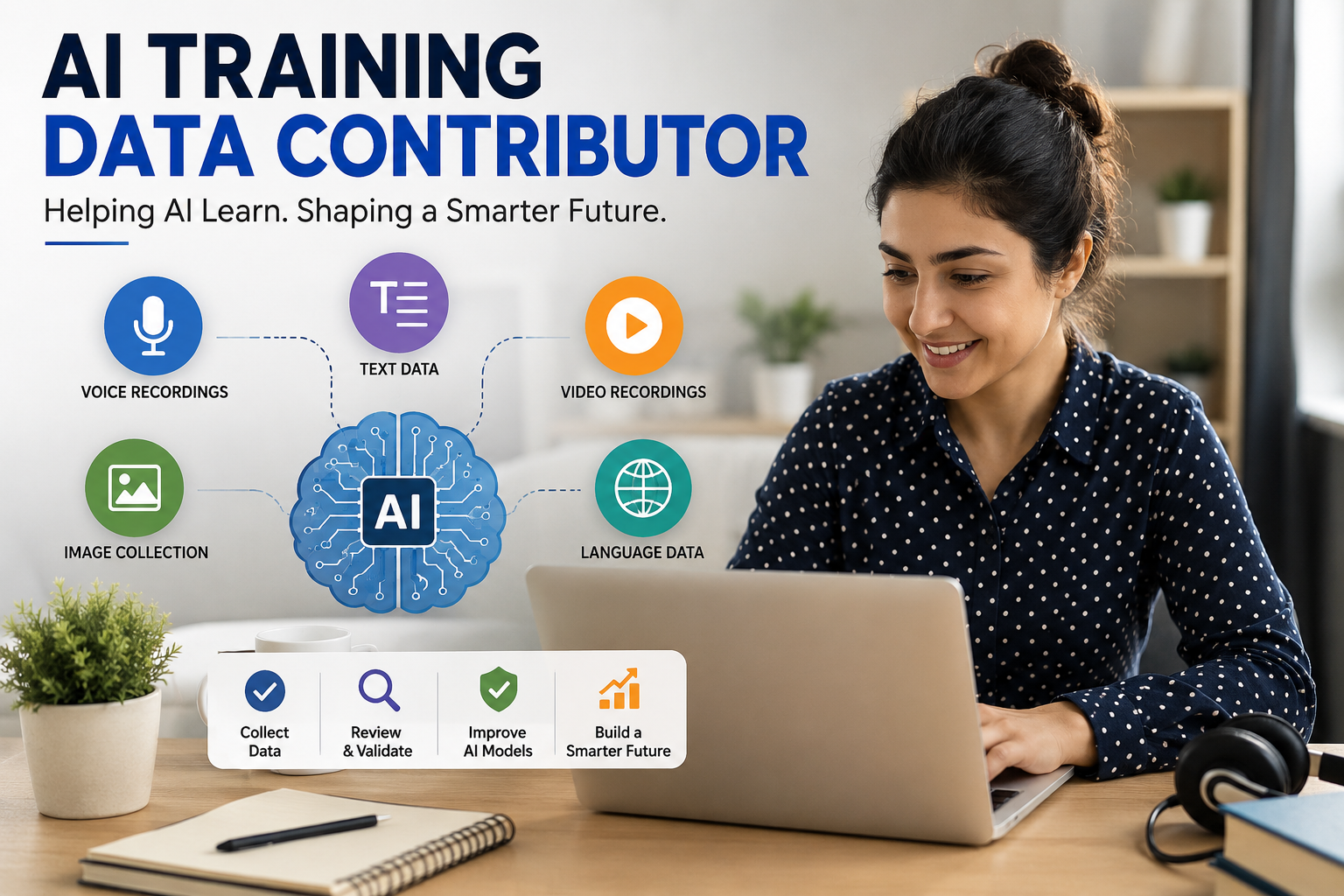
An AI Training Data Contributor is someone who helps provide the data that AI systems learn from. This can include recording voice samples, uploading images, collecting text, or completing simple AI-related tasks.
For example, when a company wants to improve a speech recognition system, it may ask people to record sentences in different languages and accents. These contributions help AI become smarter and more accurate.
In simple terms, AI learns from data, and AI Training Data Contributors help provide that data.
AI systems may seem intelligent, but they depend heavily on the quality of the data they receive. Human contributors help ensure that the data used for training is accurate, diverse, and relevant.
Every AI model starts as a blank system. It becomes smarter by learning from examples provided through training data.
The more useful and diverse the data, the better the AI system can understand patterns, recognize information, and make decisions.
Poor-quality data often leads to poor AI performance.
AI training data contributors help maintain quality by following project guidelines carefully and submitting accurate information. This improves the reliability of AI systems.
Modern AI tools need to understand people from different countries and language backgrounds.
To achieve this, companies collect data from contributors around the world. Voice recordings, text samples, and language-related tasks help AI systems become more effective across multiple languages.
AI systems can sometimes make mistakes when they learn from limited or unbalanced datasets.
By involving contributors from different age groups, regions, and cultures, companies can create more diverse datasets and reduce bias in AI models.

The responsibilities of an AI Training Data Contributor can vary depending on the project. Some tasks take only a few minutes, while others may require more detailed work.
Many projects involve gathering information that can be used for AI training.
This may include:
Audio collection is one of the most common AI training projects.
Contributors may be asked to:
These recordings help train voice assistants and speech recognition systems.
Some projects require contributors to capture images of specific objects, locations, or activities.
These images are used to improve computer vision and image recognition technologies.
Transcription involves listening to audio recordings and converting them into written text.
This helps AI systems better understand spoken language and improve speech-to-text accuracy.
Before training an AI model, companies often need people to review collected data.
Contributors may verify whether recordings, images, or text submissions meet project requirements.
Some projects involve evaluating search results, comparing AI-generated responses, or providing feedback on AI outputs.
These tasks help companies improve the overall performance of their AI systems.

Not all AI training data projects are the same. Depending on the type of data needed, contributors may work on different tasks and projects.
Audio contributors provide voice recordings that help train speech recognition and voice assistant systems.
Common tasks include:
These projects help AI systems better understand human speech and accents.
Image contributors collect and upload photos according to project requirements.
For example, a company may ask participants to take pictures of:
These images are used to train computer vision models.
Video contributors record short clips that help AI systems understand movements, gestures, and real-world activities.
Tasks may include:
This type of data is commonly used in AI-powered monitoring and recognition systems.
Text contributors help create datasets for language-based AI models.
Their work may involve:
These tasks help improve chatbots, translation systems, and large language models.
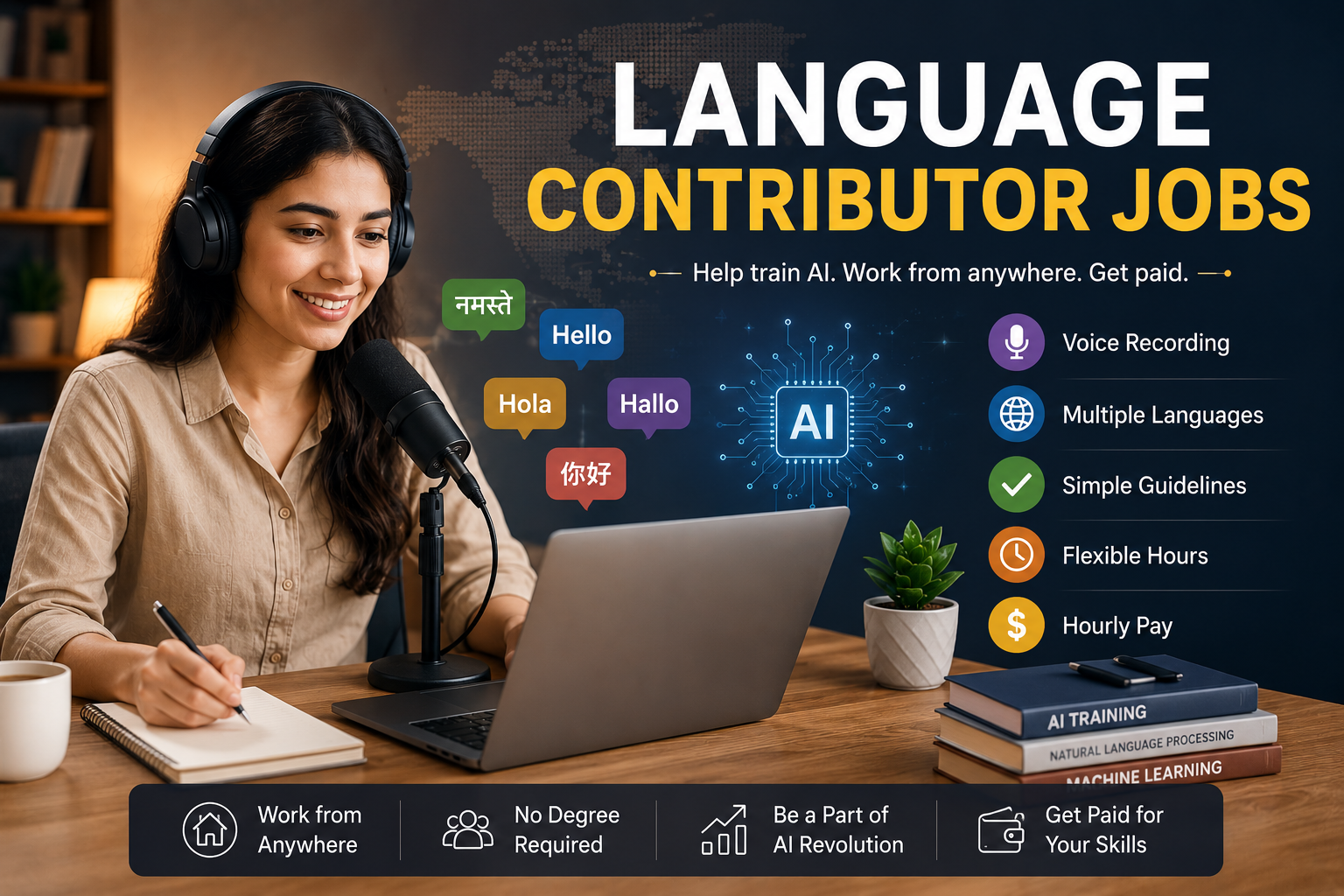
Many AI companies need contributors who speak specific languages or dialects.
Language contributors help by providing:
This data helps create multilingual AI systems that can serve users worldwide.
Data validation contributors review information submitted by other participants.
Their role is to ensure that:
This quality control process helps improve the final dataset before AI training begins.

Most AI data projects follow a similar process. Understanding this workflow can help beginners know what to expect.
The first step is joining a company or platform that offers AI data projects.
After registration, contributors usually create a profile and provide basic information about their language skills, location, and experience.
Some projects require qualification assessments before participation.
These tests help companies determine whether a contributor is suitable for a specific project.
For example, language projects may include grammar tests, while transcription projects may require typing assessments.
Once qualified, contributors gain access to available projects.
Assignments can vary depending on:
Every project includes detailed instructions.
Contributors must carefully follow these guidelines when:
Following instructions accurately is essential for approval.
After submission, project teams review the work.
They check whether the data:
Approved submissions move to the next stage of the AI training process.
Once work is approved, contributors receive payment according to project terms.
Payment structures vary and may be based on:
One reason many people are interested in AI training data jobs is that they don't always require advanced technical skills.
However, certain abilities can significantly improve your success.
Small mistakes can affect dataset quality.
Carefully following instructions and checking your work before submission can improve approval rates.
Most projects require contributors to:
Basic digital literacy is usually enough to get started.
Some projects involve language tasks, transcription, or content evaluation.
Good communication skills can help contributors perform these tasks more effectively.
AI data projects often have strict requirements.
Contributors who carefully follow project guidelines are more likely to receive positive reviews and additional opportunities.
Many contributors work on multiple projects at once.
Managing deadlines and organizing work effectively can help maximize earnings and productivity.

Many people confuse AI Training Data Contributors with Data Annotators. While both roles support AI development, their responsibilities are different.
An AI Training Data Contributor helps collect or create data for AI systems. This may include recording voice samples, taking photos, collecting videos, writing text, or participating in language-related tasks.
A Data Annotator works with existing data and adds labels or tags to help AI understand it.
For example:

For most beginners, AI Training Data Contributor roles are easier to start with because they focus on data collection rather than complex labeling tasks.
AI companies run various projects depending on the type of data they need.
Participants record sentences, conversations, or speech samples to help train speech recognition systems.
Contributors provide recordings in different languages, accents, and dialects to improve multilingual AI.
Users capture and upload photos of objects, locations, or activities according to project guidelines.
These projects involve recording short videos that help AI understand human actions and environments.
Contributors write sentences, answer questions, or provide language samples used for training language models.
Participants review search results and provide feedback to improve search engine accuracy.
One of the biggest reasons people choose this field is its flexibility.
Most projects can be completed from anywhere with an internet connection.
Many projects require no previous experience or technical background.
Contributors can often choose when and how much they want to work.
Many AI companies hire contributors from different countries and language backgrounds.
Working on AI projects provides valuable exposure to one of the fastest-growing industries in the world.
Like any job, AI data contribution also comes with challenges.
Companies expect contributors to follow instructions carefully.
Work is often project-based and may not always be available consistently.
Income can vary depending on project type, workload, and approval rates.
Even simple tasks require accuracy and attention to detail.
Many contributors use these projects as a starting point for larger opportunities in the AI industry.
Popular career paths include:
With experience, contributors can move into higher-paying AI data and project management roles.
As AI technology continues to grow, the demand for high-quality training data is increasing.
Companies are investing heavily in:
This means AI Training Data Contributor jobs are expected to remain in demand for years to come.
An AI Training Data Contributor helps collect, create, review, or validate data used to train artificial intelligence systems.
Most projects require basic computer skills, attention to detail, communication skills, and the ability to follow instructions accurately.
Yes. Many AI training data projects are beginner-friendly and do not require previous experience.
Most AI training data projects are completed remotely, making them suitable for freelancers, students, and remote workers.
Earnings vary depending on the company, project type, location, and workload. Some projects pay per task, while others pay hourly or per project.
AI may be powered by advanced technology, but it still relies on people to provide the data it needs to learn and improve. That's where AI Training Data Contributors play an important role.
From recording voice samples and collecting images to reviewing data and supporting multilingual AI projects, contributors help build the foundation of modern AI systems.
The best part is that many of these opportunities are remote, flexible, and beginner-friendly. Whether you're looking for a side income, remote work experience, or a way to enter the AI industry, becoming an AI Training Data Contributor can be a great place to start.
Remote Ghar